

The Managing Director and Chief Executive of the Nigerian Airspace Management Agency (NAMA), Engr. Ahmed Umar Farouk, has reaffirmed the Agency’s unwavering commitment to building human capacity, improving staff welfare, and modernising air traffic infrastructure across the nation.
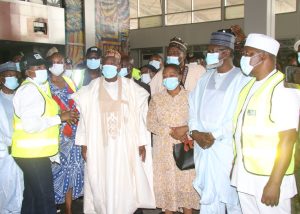
He made the declaration at the 54th Annual General Meeting (AGM) of the Nigerian Air Traffic Controllers’ Association (NATCA), held from 21st to 23rd October 2025 at the Nigerian Air Force Conference Centre, Abuja.
The event, themed “The Human Edge: Capacity Building in the Next Generation Air Traffic Management,” brought together aviation stakeholders, policy leaders, and industry professionals to deliberate on the future of air traffic management in Nigeria.
Engr. Farouk commended NATCA’s leadership for choosing a theme that underscores the centrality of the human factor in aviation safety. He stressed that, despite technological advancement in air traffic management, the controller remains the most vital component in ensuring the safety, efficiency, and reliability of flight operations.
“The controller – the human professional – remains the most critical component for safety and efficiency in our skies,” he said, adding that capacity building remains the backbone of sustainable airspace management.
Farouk also congratulated NATCA on its growing global recognition, particularly for its representation in the International Federation of Air Traffic Controllers’ Associations (IFATCA) and for successfully hosting the IFATCA Africa and Middle East (AFM) Executive Council meeting. “These accomplishments are a testament to your growing influence on the international stage,” he remarked.
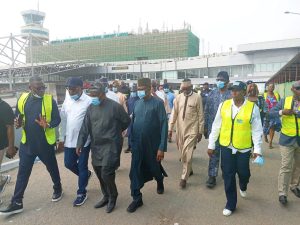
Highlighting the Agency’s achievements under his administration, Farouk described NAMA’s ongoing infrastructure overhaul as the most ambitious in its history. According to him, the initiative is aimed at creating a modern, safe, and conducive working environment for personnel across Nigeria’s airspace system.
He disclosed that the Agency has renovated and modernised control towers in 11 key airports, including Abuja, Kano, and Port Harcourt, while also overhauling administrative and technical buildings in Lagos, Bauchi, Sokoto, Benin, and other locations.
To enhance operational reliability, NAMA has secured its critical assets through perimeter fencing at its Very High Frequency Omnidirectional Range (VOR) and Total Radar Coverage of Nigeria (TRACON) sites.
It has also ensured uninterrupted power supply by deploying hundreds of new generators, solar hybrid systems, and advanced Automatic Mains Failure (AMF) panels and UPS units.
In addition, the Agency has procured new Very High Frequency (VHF) radios, Instrument Landing System/Distance Measuring Equipment (ILS/DME) facilities, and operational vehicles to boost service delivery.
“These interventions, valued at tens of billions of Naira, reflect our dedication to providing world-class infrastructure to support world-class professionals,” the NAMA boss said.
Farouk declared 2025 as NAMA’s Year of Capacity Building, noting that the Agency has prioritised human capital development as the foundation for safe and efficient airspace operations.
He revealed that 230 senior managers, including 110 air traffic controllers, were trained overseas in 2025 alone – the highest number ever sponsored by the Agency for international training.
Domestically, he said nearly 90 percent of NAMA’s operational, technical, and contract staff participated in local training and workshops, marking the most extensive capacity development exercise since the Agency’s establishment 25 years ago.
“This is the largest single-year training investment in the history of NAMA,” Farouk stated proudly. “We increased the training budget by 78 percent to ensure that every staff member is equipped to meet the demands of a modern, technology-driven airspace system.”
He added that such investments demonstrate management’s resolve to make “The Human Edge” not just a conference theme but a philosophy guiding NAMA’s operations.
On staff welfare, Engr. Farouk announced that NAMA is finalising the implementation of new Conditions of Service (COS) once approved by the National Salaries and Wages Commission.
The new COS, he explained, would significantly enhance the remuneration and welfare packages of all employees, including air traffic controllers.
“I assure you that its implementation will greatly improve the take-home package of our staff, which in turn will boost morale and productivity,” he said.
While celebrating these achievements, the NAMA Managing Director called attention to the Agency’s funding challenges, particularly the statutory deductions of between 30 and 50 percent from its internally generated revenue.
“These deductions severely constrain our ability to modernise facilities and maintain operational excellence,” he lamented.
Farouk made a passionate appeal to the Federal Government to consider granting NAMA a waiver from such deductions, arguing that the move would enable the Agency to reinvest its full earnings into infrastructure, technology upgrades, and personnel development.
“Granting this waiver would be a game-changer for Nigerian aviation safety,” he asserted. “It would not only strengthen NAMA’s financial capacity but also enhance the overall safety and efficiency of the national airspace system.”
Farouk reaffirmed NAMA’s commitment to partnering with NATCA and other stakeholders in advancing Nigeria’s aviation ecosystem.
He praised air traffic controllers for their dedication, professionalism, and commitment to safety, describing them as “the custodians of Nigeria’s skies.”
He also commended the Minister of Aviation and Aerospace Development, Barrister Festus Keyamo, SAN, and the Permanent Secretary, Dr Ibrahim Abubakar Kana, MNI, for their visionary leadership and support, which he said have made NAMA’s recent milestones possible.
“As we continue on this journey of transformation, NAMA remains resolutely committed to strengthening the capacity, welfare, and morale of our people,” he said. “Together, we are building not just the next generation of air traffic management, but the future of Nigerian aviation.”
The AGM, which is being attended by top officials from the aviation industry, policy experts, and representatives from international bodies,had participants commending NAMA’s strides in infrastructure renewal, workforce development, and its vision for a safer, smarter, and more efficient airspace system.
About The Author