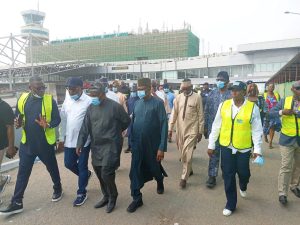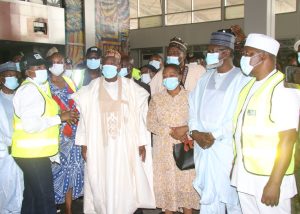


The Nigeria Civil Aviation Authority (NCAA) and the United Kingdom Department for Transport (UK DfT) have wrapped up a three-day Joint Aviation Security Vulnerability Assessment in Abuja, reinforcing bilateral cooperation aimed at strengthening Nigeria’s aviation security architecture in line with global standards.
The exercise, which held at the NCAA headquarters from 27 to 29 January 2026, was carried out under an existing Memorandum of Understanding between both countries and focused on evaluating the robustness of security measures across Nigeria’s aviation system against emerging and evolving threats.
Representing the Director General of Civil Aviation, Capt. Chris Najomo, the Director of Aviation Security Regulation at the NCAA, Dr Omogo Bernard, said the Authority welcomed the outcome of the assessment and would move swiftly to address all observations and recommendations.
He noted that continuous review and improvement of security processes were essential to safeguarding passengers, aircraft and airport infrastructure, particularly as air travel volumes continue to rise.
According to the NCAA, the joint team examined critical aspects of aviation security, including passenger and cabin baggage screening processes, access control to restricted areas, perimeter protection of airport facilities, and the level of coordination among security agencies operating within airport environments.
The assessment also considered compliance with national regulations and alignment with the International Civil Aviation Organisation’s Standards and Recommended Practices.
Leading the UK delegation, Mr Adam Clarkson commended the NCAA and relevant airport authorities for implementing a layered security framework designed to deter, detect and respond to potential security threats.
He, however, identified areas requiring further enhancement, stressing the importance of consistent procedures, regular testing of security systems, and sustained training for aviation security personnel to keep pace with international best practice.
Aviation security remains a critical pillar of global air transport safety. Under ICAO’s Annex 17 to the Chicago Convention, member states are required to establish and maintain effective measures to protect civil aviation from acts of unlawful interference.
In recent years, ICAO has repeatedly emphasised the need for states to strengthen oversight, adopt risk-based screening approaches, and improve information sharing among stakeholders.
Nigeria’s aviation sector has witnessed steady growth since the easing of pandemic-related restrictions, with passenger traffic increasing across major airports.
Experts note that this growth underscores the need for continuous vulnerability assessments to ensure that security systems remain effective and adaptable to higher passenger volumes and increasingly sophisticated threats.
The partnership with the UK DfT forms part of Nigeria’s wider international engagement to enhance aviation security oversight through technical cooperation, peer reviews and capacity development.
The UK is recognised globally for its aviation security expertise and has supported several countries through advisory services and training programmes.
The NCAA said the findings from the Abuja assessment would be integrated into its ongoing aviation security enhancement initiatives, reaffirming Nigeria’s commitment to maintaining safe, secure and internationally compliant aviation operations for both domestic and international flights.
About The Author