Nigeria’s aviation modernisation efforts received a significant boost on Thursday as the Federal Government commenced construction of a new corporate headquarters and integrated Air Traffic Management (ATM) Centre for the Nigerian Airspace Management Agency in Abuja, a project officials say will redefine the nation’s airspace coordination architecture and strengthen operational efficiency.
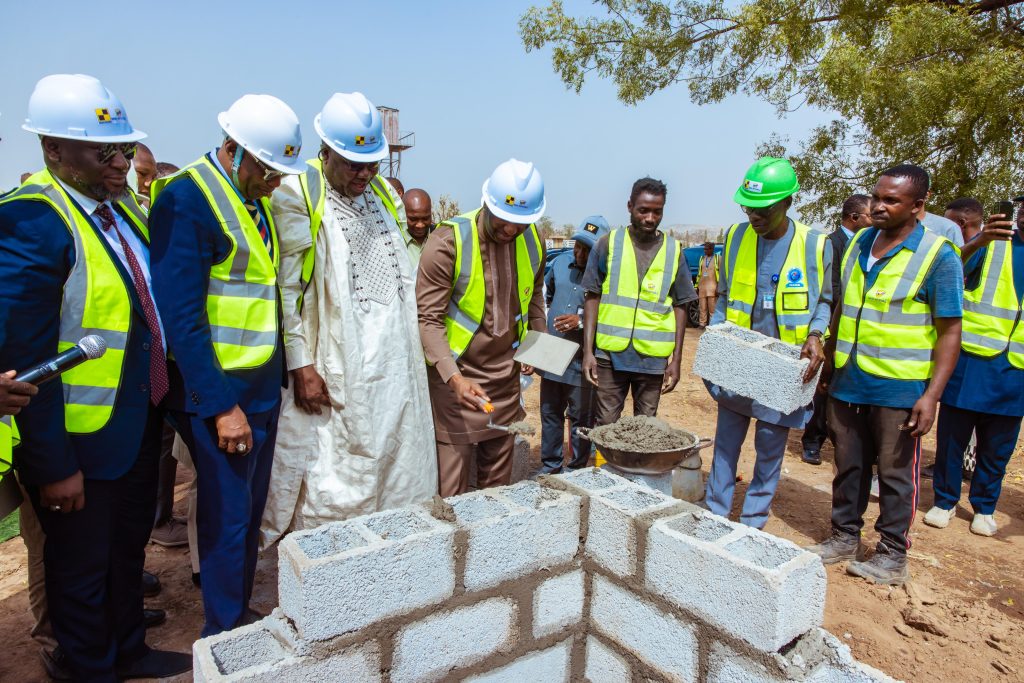
The foundation-laying ceremony, held at Nnamdi Azikiwe International Airport, was performed by Minister of Aviation and Aerospace Development Festus Keyamo, who described the initiative as a strategic investment designed to modernise the infrastructure supporting Nigeria’s aviation safety systems and institutional capacity.
Addressing aviation stakeholders and government officials present, the minister stated that the project symbolises the administration’s resolve to reposition critical aviation agencies through modern facilities capable of supporting innovation, seamless coordination, and enhanced service delivery.
He noted that for years, key aviation institutions had operated from outdated or fragmented facilities that did not reflect their national importance or technological demands.
According to him, the new complex will consolidate executive management offices with a technologically advanced ATM Centre, creating a unified operational environment for monitoring and managing Nigeria’s sovereign airspace in real time.
Such integration, he explained, would improve safety oversight, accelerate decision-making processes, and enhance national credibility within the global aviation community, while also boosting investor confidence in the sector.
Keyamo emphasised that the project followed a strictly regulated procurement process compliant with the Public Procurement Act 2007, adding that contractors would be held to clearly defined quality and delivery benchmarks.
He stressed that the government would not tolerate delays or deviations from specifications, reiterating its commitment to transparency and accountability in public infrastructure delivery.
In his remarks, NAMA Managing Director Ahmed Umar Farouk described the groundbreaking as a historic milestone for the agency, recalling that although NAMA was established in 1999, its administrative headquarters remained in Lagos for more than twenty years before relocation plans to Abuja began in 2020 in accordance with federal policy.
Despite operating from temporary offices in the capital for several years, he said, staff had continued to maintain safe and reliable air navigation services nationwide.
Farouk disclosed that the new facility would house a centralised command centre designed to unify the two existing Area Control Centres in Lagos and Kano into a single operational hub.
The consolidation, he explained, will produce a harmonised national Flight Information Region, enabling controllers to monitor aircraft movements across the country from one coordinated system and significantly reducing communication risks during sector transitions.
He further revealed that the forthcoming ATM Centre will be powered by advanced automation technology engineered for high reliability and scalability, ensuring that the system can accommodate projected growth in air traffic over the coming decades.
The upgraded infrastructure, he added, would optimise routing efficiency, minimise operational redundancies, reduce airline fuel consumption, and lower overall industry costs.
Beyond operational technology, the headquarters complex is designed as a comprehensive administrative and welfare environment. Plans include office accommodation for between fifteen and sixteen departments, a 200-seat conference hall, library, registry, executive suites, rest areas for air traffic controllers, recreational facilities, a daycare centre, and a drivers’ lounge.
Supporting utilities will feature dedicated power systems, water treatment facilities, multiple security posts, and extensive parking areas.
While commending the government for initiating the project, the NAMA chief also appealed for sustained financial support for the agency’s proposed Dual Surveillance System, a platform intended to serve both civil aviation monitoring and military command-and-control purposes.
He described the system as a vital national security asset that would strengthen coordination between aviation regulators and defence authorities amid prevailing security concerns.
The new headquarters and centralised ATM hub are a transformative step that could reshape Nigeria’s airspace governance framework, positioning the country to meet future aviation demand while aligning its operational standards with global best practices.
About The Author