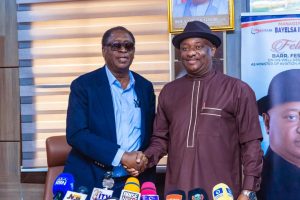
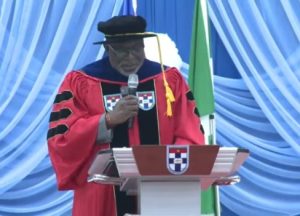
Professor Bamidele Badejo, Chair of the Lagos State Government Professorial Endowment on Transport Studies at Lagos State University (LASU), has called on Nigeria government to urgently develop a cohesive, modern, and sustainable transport system that reflects its population size, economic potential, and developmental aspirations.
Delivering a keynote address titled “The Future of Transportation in Nigeria: Trends, Challenges, Opportunities and the Way Forward” at the Transport Infrastructure Summit organised by Justalive Communications Ltd., and held at the Providence Hotel, Ikeja GRA, Lagos, Professor Badejo painted a vivid picture of a nation whose transportation system is both its greatest necessity and its greatest weakness.
“Transport is life, nurtures life, and keeps life going,” he said, stressing that the nation’s economy and daily existence depend heavily on the ability of people and goods to move efficiently and safely.
He described transportation as “the inviolable companion of human existence,” warning that if all means of transport were halted even for a day, “life itself would grind to a temporary death.” From workers and traders to emergency responders and election officials, he noted, “the paralysis would be complete.”
Despite being richly endowed with natural and human resources, Professor Badejo lamented that Nigeria remains “a country of vast potential but limited coordination,” where transportation—one of the most vital sectors for economic development—continues to lag behind.
The LASU scholar observed that over 90 per cent of passenger and freight movement in Nigeria still depends on road transport, while rail, maritime, and air transport remain underdeveloped and underutilised due to decades of neglect and poor investment.
“Transportation is the backbone of economic and social development,” he emphasised. “It connects markets, enhances productivity, and promotes national integration. Without it, every sector – agriculture, trade, and industry – remains stunted.”
He underscored the need for Nigeria to design a modern, multimodal transport network that responds to current demands in mobility, safety, and sustainability while preparing for the challenges of urbanisation, population expansion, and climate change.
According to Professor Badejo, the transport sector operates on principles that must guide effective planning and policy-making.
He listed several critical attributes that determine success in transport management: Transportation is demand responsive and depends on where people and goods exist; The global economy influences trade routes and transportation patterns; The sector is highly technology-dependent, requiring regular innovation; Transportation is capital and labour intensive, demanding large-scale financing and human resources; and infrastructure and logistics are fundamental to system efficiency.
“Transport thrives only where there is motion – where vehicles move, revenue flows, and life continues. The moment we stop moving, we begin to lose value,” he explained.
Professor Badejo drew attention to several emerging trends shaping the Nigerian transport landscape. These include the pressure of growing urban populations, worsening traffic congestion, and increased competition among transport operators.
Other concerns he raised were: Poor public transport connectivity; Neglect of freight and logistics; The “Okada” and “Keke” menace across cities; Absence of pedestrian walkways; Air and water pollution caused by outdated vehicles and ferries; and rising insecurity, highway banditry, and vandalism of critical transport infrastructure.
“These are not isolated issues – they are interconnected symptoms of systemic neglect,” he warned, calling for holistic reform rather than piecemeal interventions.
The LASU don outlined deep-rooted challenges that have hindered Nigeria’s ability to build a resilient transport system. These include: Infrastructure deficit across all modes; Policy inconsistency and fragmented regulation; Insufficient funding and poor investment models; Energy instability and high operating costs; Weak maintenance culture; and low human capacity, dominated by untrained or “qualified by experience” personnel rather than technically skilled professionals.
“Nigeria’s transportation challenge is not only about infrastructure; it is also about institutional strength, discipline, and political will,” he stated. “Until we address these foundational issues, we will continue to operate outdated systems in a fast-changing world.”
Despite the daunting challenges, Professor Badejo highlighted several opportunities that could reposition Nigeria’s transport sector for inclusive growth and innovation.
He noted that Nigeria could replicate the “mobile telephony revolution” by leapfrogging into modern transport technologies such as clean energy, digital mobility, and smart logistics.
Some of the opportunities he outlined include: Massive employment generation; Revenue creation and industrial growth; Development of a blue economy through marine transport; Port reforms and creation of logistics hubs; Revitalisation of rail and inland waterways; Expansion of infrastructure and urban facilities; and empowerment of human capital through training and institutional development.
“Transportation determines how efficiently a country functions. If we modernise it, we will not only move faster but also think, produce, and grow faster as a nation,” he said.
In outlining a blueprint for progress, Professor Badejo proposed a comprehensive national transport strategy anchored on sustainability, innovation, and inclusiveness.
He urged government and stakeholders to: Develop an integrated multimodal transport system that connects road, rail, air, and water networks;
Implement green mobility strategies to combat pollution and reduce carbon emissions;
Encourage private sector participation through public-private partnerships (PPPs);
Ensure land use integration and sustainable physical planning;
Strengthen policy and regulatory frameworks for coherence and accountability; and
Foster a culture of innovation and maintenance to preserve existing infrastructure.
“The future will not just happen; we must build it deliberately,” he declared. “Every policy, every road, every railway must be part of a single national vision for movement and progress.”
In his closing remarks, Professor Badejo reiterated that developing an integrated, multimodal transport system is central to Nigeria’s long-term economic resilience and social wellbeing.
He called for pragmatic collaboration between federal, state, and private entities to ensure that transport planning aligns with sustainable development goals.
“With coordinated action and political will, Nigeria can build a transport system that supports growth, enhances quality of life, and boosts global competitiveness,” he concluded. “We must move from talk to transformation – because transportation is the heartbeat of development.”
About The Author