
The Airline Operators of Nigeria (AON) has warned that domestic airlines could shut down operations nationwide if the violent disruption of airline activities witnessed at major Nigerian airports on August 11, 2026 is repeated.
The association issued the warning in a communiqué released after its general meeting in Abuja on September 23, describing the action by aviation unions and others as an unlawful interference with airline operations and a serious threat to aviation safety and security.
The AON said the August 11 incident, which affected operations at the Murtala Muhammed Airport Terminal 1 and Terminal 2 in Lagos and the Nnamdi Azikiwe International Airport, Abuja, exposed vulnerabilities in the security architecture of Nigerian airports and required an urgent review of security procedures.
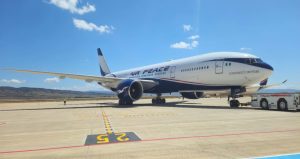
According to the association, union members blocked access to Air Peace’s departure terminals, entrances and check-in counters, preventing airline employees from reaching their workstations and passengers from accessing services.
The AON further alleged that some union members engaged in acts of violence against airline workers, resulting in bodily injuries.
It described the incident as “a gross violation of the rights of airlines to a safe and secure operational and business environment” and warned that such actions could have serious implications for Nigeria’s aviation industry.
The August 11 disruption affected flights in Lagos and Abuja, with Air Peace and United Nigeria Airlines among the carriers whose operations were disrupted.
According to reports, union members barricaded access to Air Peace terminals, leaving passengers stranded and forcing airlines to cancel or reschedule flights.
The AON said the incident went beyond an industrial dispute because of the manner in which airport facilities and access points were allegedly blocked.
It cited the International Civil Aviation Organisation’s (ICAO) Annex 17 on Aviation Security, which defines acts of unlawful interference as acts or attempted acts that jeopardise the safety of civil aviation.
ICAO says Annex 17 establishes international standards and recommended practices aimed at preventing and suppressing unlawful interference against civil aviation.
The association argued that the events of August 11 therefore represented a serious aviation security concern, particularly because the disruption occurred within critical airport environments.
“The AON condemns very seriously the recent upsurge in the use of unions to threaten, harass, and intimidate Nigerian airlines by certain quarters,” the association stated, describing the development as “illegal, unconstitutional, and above all, an aberration”.
The operators said the financial consequences of the disruption were substantial, with Air Peace alone reporting that more than 70 flights were affected and estimating its losses at over N2 billion.
United Nigeria Airlines also had more than 30 flights disrupted, according to the AON, with the association estimating that about 13,000 passengers were affected based on the aircraft and sectors scheduled for the day.
Air Peace estimated its losses at more than N2 billion, while United Nigeria reported disruptions to more than 30 flights.
Beyond lost ticket revenue, the AON said airlines incurred additional costs arising from the disruption, including passenger rebooking, accommodation, refunds, crew repositioning, aircraft rescheduling and other recovery measures.
It stressed that these costs came at a time when Nigerian airlines were already operating under severe financial pressure arising from high fuel prices and foreign-exchange-linked maintenance expenses.
The association also said the impact of the disruption extended far beyond Lagos and Abuja because the two airports serve as major hubs through which domestic airlines distribute aircraft and passengers to other airports across the country.
Consequently, it said, disruption at the two hubs affected other domestic, regional and international services, leaving passengers stranded at airports beyond the locations where the industrial action actually occurred.
The AON further warned that the incident had exposed weaknesses in airport infrastructure and security arrangements, particularly where people could prevent passengers and airline employees from accessing terminals.
“When the actions of unions result in passengers and airlines’ staff being prevented from accessing airline terminals, the consequences extend beyond those involved,” it said.
The association also raised concerns about investor confidence, arguing that the ease with which airline operations could allegedly be disrupted could make aircraft lessors and other investors reconsider their interest in Nigeria’s aviation market.
The AON’s position comes against the background of the unresolved dispute that triggered the August industrial action.
The unions’ grievances included allegations relating to non-remittance of the five per cent Ticket Sales Charge and concerns over workers’ rights to unionise.
The unions subsequently suspended the action, allowing affected airlines to resume operations and begin clearing passenger backlogs.
The operators also used the communiqué to address the persistent issue of flight delays and cancellations, saying airlines had little incentive to deliberately delay or cancel flights because such disruptions resulted in financial losses and damage to their reputations.
According to the AON, several causes of delays and cancellations are outside the direct control of airlines.
It identified adverse weather, congested aircraft parking aprons at Lagos and Abuja airports, sunset restrictions at secondary airports, VIP movements, bird strikes, foreign object debris, inadequate aviation fuel supply, inefficient air traffic flow and inadequate airport infrastructure as some of the major factors.
The association said many secondary airports operate within restricted hours, largely between 7am and 6pm, because of limitations in navigational and visual aids as well as shortages of technical personnel.
It argued that when an aircraft misses the operating window because of an earlier delay, the airline may have no option but to cancel the affected service.
The AON also pointed to inadequate check-in facilities, insufficient passenger screening and exit points, unserviceable baggage carousels and unreliable ground-support equipment as sources of avoidable delays.
On aviation fuel, the association said Jet A1 had risen above N2,500 per litre and that supply remained unreliable at several secondary airports. Recent market reports indicate that Jet A1 prices have varied considerably between Nigerian airports, underscoring the fuel-cost pressure confronting carriers.
The operators also said airspace closures for VIP movements, while necessary for security reasons, could create delays across the airline network and were not within the control of carriers.
On the reconstruction and rehabilitation of the Murtala Muhammed International Airport in Lagos, the AON commended the Federal Government and the Federal Airports Authority of Nigeria (FAAN) for the ongoing work.
However, it urged airport authorities to involve airlines from the early design stages of major infrastructure projects, arguing that carriers, as key users of airport facilities, could identify potential operational and passenger-flow problems before projects were completed.
The association said early consultation with airlines would help prevent design deficiencies that could compromise the functionality of upgraded airport facilities.
In its concluding position, the AON called for an immediate review and overhaul of aviation security procedures and emergency response plans at airports across Nigeria, saying the August incident had exposed weaknesses in the existing arrangements.
The association pledged continued support for Air Peace and other member airlines in resisting what it described as unlawful interference with airline operations.
It also declared that its members would maintain a “zero-tolerance policy” towards actions that threaten the safety of airline operations, employees, passengers and equipment.
Most significantly, the AON said that if a disruption similar to the August 11 incident occurred against any domestic airline in the future, all AON member airlines would immediately shut down operations.
The declaration effectively places the government, aviation regulators, airport authorities, unions and airlines under pressure to prevent a recurrence of the type of confrontation that brought flight operations at major airports to a standstill in August.
The AON also said its members had expressed confidence in the leadership of the association at the September 22 general meeting at the Transcorp Hilton in Abuja, pledging their support for the association’s constitution, professional code of conduct and collective position on aviation safety.
It stressed that while airlines recognised the legitimate role of organised labour, no industrial action should compromise aviation security or endanger passengers, employees and critical airport infrastructure.
ICAO’s aviation-security framework requires states to maintain mechanisms for reporting and addressing acts of unlawful interference and related security incidents, underscoring the importance of effective airport security and response arrangements.
The AON therefore wants the August 11 episode treated not merely as an industrial-relations dispute but as a warning about the consequences of allowing disputes involving airlines and unions to spill into airport operational areas.
About The Author