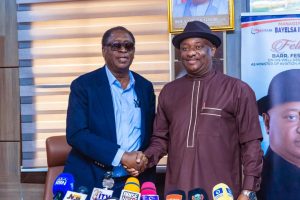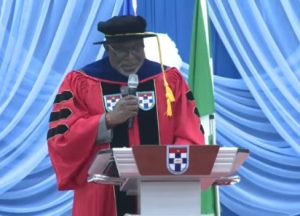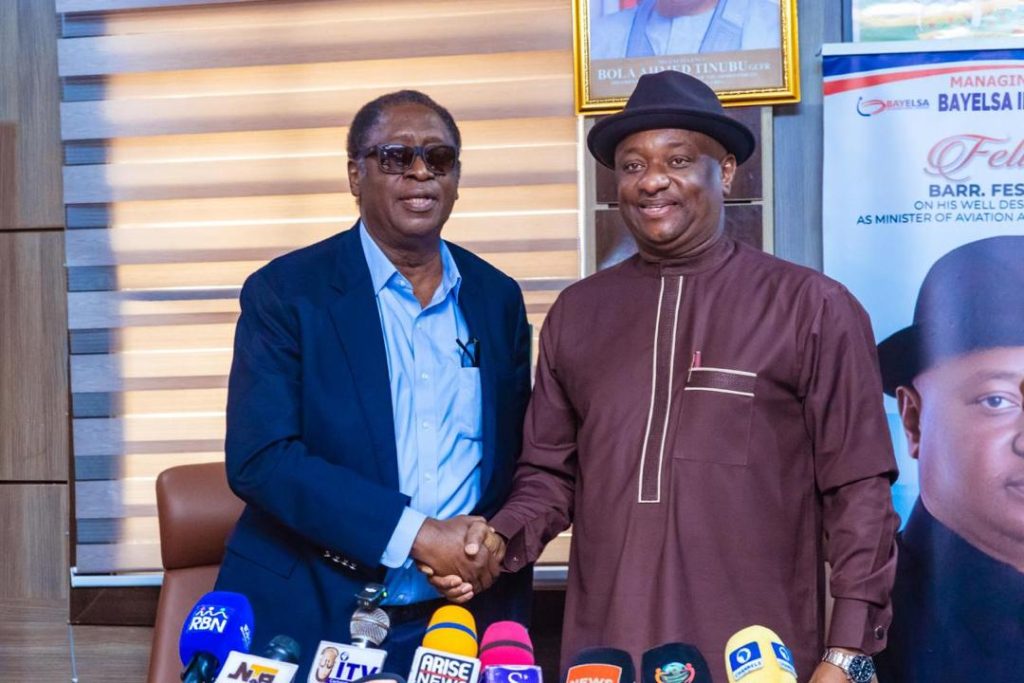
The Chairman of Bi-Courtney Aviation Services Limited (BASL), Dr Wale Babalakin, has praised President Bola Tinubu for facilitating the resolution of the protracted dispute surrounding the Murtala Muhammed Airport Terminal Two (MMA2), Lagos, saying the breakthrough will open a new chapter of infrastructure development, investment and employment generation.
Babalakin, who described the settlement as a victory for Nigeria, also pledged that Bi-Courtney would fulfil its obligations under the agreement and work with the Federal Government and other stakeholders to unlock the terminal’s full commercial and operational potential.
The settlement agreement was signed by the Federal Government, the Federal Airports Authority of Nigeria (FAAN), Bi-Courtney Limited and Stabilini Visinoni Limited, bringing an end to an impasse that had persisted for more than 18 years.
Speaking at the signing ceremony, Babalakin attributed the breakthrough to Tinubu’s intervention through the Minister of Aviation and Aerospace Development, Festus Keyamo, noting that the President’s involvement had helped create an opportunity for the parties to resolve their differences and focus on the future of the airport facility.
“This is not a win for us alone; it is a win for Nigerians,” he said.
He expressed gratitude to the President, the aviation minister and Nigerians who had followed the dispute over the years, adding that the agreement offered an opportunity to move beyond prolonged disagreements and concentrate on projects capable of delivering economic benefits.
According to him, the resolution demonstrates that longstanding disputes between the government and private sector investors can be addressed through dialogue and constructive engagement.
He said the development was particularly significant for Nigeria’s investment climate, where uncertainty surrounding major projects could discourage businesses from committing capital to infrastructure with long gestation periods.
Babalakin explained that investors needed confidence that commercial agreements involving the government could be managed through constructive negotiations when disagreements arose.
He said resolving the MMA2 dispute would send a positive message to the business community that prolonged disagreements did not necessarily have to prevent investment projects from progressing.
The BASL chairman expressed optimism that the settlement would encourage greater cooperation between public institutions and private enterprises, particularly in sectors such as aviation that require substantial investment in infrastructure, technology and operational capacity.
Beyond resolving the longstanding disagreement, Babalakin said the agreement had created an opportunity to advance key projects at MMA2, including the completion of a hotel and conference centre and the commencement of regional flight operations.
He identified these projects as important components of the terminal’s future development, with the potential to improve airport services, stimulate commercial activity and create employment across several sectors.
The proposed hotel and conference centre, when completed, would provide accommodation and meeting facilities for business travellers, corporate organisations and other airport users.
Babalakin said the project could also generate jobs in construction, engineering, hospitality, facility management and related services.
The construction phase would require various categories of skilled and technical workers, while the operational phase could create further employment in hotel management, catering, customer service, maintenance and other hospitality-related activities.
The project could also provide business opportunities for suppliers, contractors and service providers, potentially extending its economic impact beyond the immediate airport environment.
For an airport serving Lagos, one of Nigeria’s major commercial centres, additional accommodation and conference facilities could strengthen the range of services available to business travellers and organisations seeking venues for meetings and corporate events.
Babalakin also highlighted the proposed commencement of regional flight operations as another opportunity to expand MMA2’s commercial activities.
He said regional operations, supported by the planned expansion of the airport apron, could create additional demand for aviation professionals and other workers required to support flight operations.
Such activities could generate opportunities for skilled personnel and businesses providing ground handling, passenger services, maintenance support and other aviation-related services, depending on the scope of operations introduced.
The proposed apron expansion is also expected to support the terminal’s operational requirements as activities develop.
However, the realisation of these benefits will depend on the effective implementation of the settlement and the delivery of the proposed projects.
Babalakin acknowledged the responsibility facing Bi-Courtney following the resolution, assuring the President, the Ministry of Aviation and Aerospace Development, FAAN and the Nigerian public that the company would not undermine the confidence placed in it.
“We will not disappoint the President, the Ministry of Aviation and Aerospace Development, FAAN or Nigerians,” he said.
His assurance comes as attention shifts from the prolonged dispute to the responsibilities of the parties under the agreement and the prospects for further development at MMA2.
The settlement also covers outstanding issues arising from the longstanding commercial relationship between the parties, including matters concerning the General Aviation Terminal (GAT), which remained under FAAN’s control and operation.
According to the statement, the agreement incorporates reciprocal concessions and revised obligations, providing a framework for the parties to move forward and address outstanding matters.
The inclusion of these issues in the settlement is intended to establish a basis for renewed cooperation and reduce the uncertainty that had characterised the relationship over the years.
For the aviation industry, the agreement could have implications beyond the immediate interests of the parties, particularly in demonstrating how disagreements involving public authorities and private infrastructure operators can be resolved.
Airport infrastructure requires significant capital investment, long-term planning and coordination among government agencies, operators, airlines and other service providers.
Protracted disputes can complicate these relationships and delay projects intended to expand capacity or improve services.
The resolution of the MMA2 impasse therefore presents an opportunity to refocus attention on infrastructure delivery and the commercial development of the terminal.
Babalakin said the agreement represented a fresh opportunity for cooperation, improved facilities and the realisation of MMA2’s full potential.
He reiterated his appreciation to Tinubu for facilitating the settlement, stressing the importance of translating the breakthrough into practical outcomes that would benefit Nigerians.
While the signing of the agreement marks a significant step towards resolving the longstanding dispute, its wider economic value will ultimately depend on how effectively the parties discharge their obligations.
The completion of the hotel and conference centre, progress on regional flight operations and the planned apron expansion will be important indicators of whether the settlement delivers the promised improvements in infrastructure, commercial activity and employment.
For Bi-Courtney, the immediate task is to honour its commitments and demonstrate that the agreement can produce tangible results. For the Federal Government and other parties, the challenge will be to sustain the cooperation required to implement the settlement.
Babalakin expressed confidence that the agreement would strengthen investor confidence and create opportunities for economic growth, describing the resolution as a development that should benefit not only the parties involved but also the wider Nigerian public.
About The Author