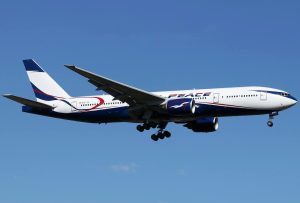

Umza Air has unveiled plans to strengthen its domestic operations, improve passenger connectivity and expand its fleet with the acquisition of Airbus aircraft as the airline intensifies efforts to establish a stronger presence in Nigeria’s aviation market.
The airline said it was pursuing a growth strategy centred on affordable airfares, improved connectivity and operational reliability, while positioning itself to take advantage of emerging opportunities in the domestic and international aviation markets.
The Commercial Manager of Umza Air, Awotunde Adedeji, disclosed this during an engagement with members of the League of Aviators and Aviation Correspondents (LAAC), where he outlined the airline’s commercial objectives, route development strategy and long-term fleet expansion plans.

He said the airline was conscious of the economic realities confronting Nigerian passengers, particularly the increasing cost of air travel, operational disruptions and the need for better value for money.
According to him, Umza Air’s ambition is to make air transportation more accessible to Nigerians through competitive fares and dependable services, while ensuring that its operations remain commercially viable in an increasingly challenging business environment.
Adedeji explained that the airline’s commercial philosophy was based on three major considerations: affordability, connectivity and operational reliability.
He noted that although rising aviation costs continued to put pressure on airline operations, Umza Air remained committed to providing passengers with reasonably priced travel options without compromising the standards necessary for safe and reliable operations.
On its domestic route network, the Commercial Manager disclosed that the airline currently operates services to nine destinations, namely Abuja, Kano, Birnin Kebbi, Maiduguri, Yola, Sokoto, Lagos, Ilorin and Gombe.
He said the choice of these destinations was informed by the need to connect important commercial and regional centres, facilitate economic activities and provide Nigerians with more convenient transportation options.
He explained that the airline was particularly interested in strengthening air connections between Lagos and major cities in northern Nigeria because of the considerable passenger movement along the corridor.
According to him, the routes serve different categories of travellers, including businesspeople, government officials, families and individuals travelling for other economic and personal engagements.
He stressed that Umza Air’s network development strategy went beyond introducing new destinations, explaining that the airline was paying attention to passenger demand, market viability and the flight frequencies required to serve different markets effectively.
The Commercial Manager said the airline was determined to develop a route network that would respond to actual passenger needs while supporting the sustainability of its commercial operations.
In a significant development for its fleet expansion programme, he disclosed that Umza Air had concluded a purchase agreement for the acquisition of Airbus A320-200 and A340-600 aircraft.
Adedeji described the agreement, facilitated through the airline’s engagement with Airbus, as an important milestone in its efforts to increase operational capacity and diversify its services.
He explained that the A320-200 aircraft would be deployed to support the airline’s scheduled commercial operations, while the A340-600 aircraft would be used for its 2027 Hajj operations and subsequent pilgrimage seasons.
The planned acquisition, he said, reflected the airline’s ambition to strengthen its capacity, expand its operational reach and participate more actively in the international aviation market.
He added that the airline understood the importance of making strategic investments and establishing strong industry partnerships to achieve sustainable growth.
According to him, Umza Air’s objective was to develop an airline that could compete effectively in the market while providing meaningful value to passengers and other stakeholders.
The Commercial Manager also used the engagement to highlight the importance of maintaining a constructive relationship between airline operators and aviation journalists, describing the media as an important partner in the development of the aviation industry.
He said aviation reporting required specialised knowledge because the industry involved complex operational, commercial, regulatory and safety issues that could influence public confidence and the reputation of operators.
He acknowledged the responsibility of aviation correspondents in informing the travelling public and holding industry stakeholders accountable, urging them to ensure that their reports were factual, balanced and properly informed.
He, however, emphasised that the airline was not opposed to critical reports, noting that constructive criticism was essential to identifying weaknesses and improving service delivery.
Adedeji said Umza Air did not expect favourable coverage at all times but valued accuracy, fairness and opportunities for meaningful engagement whenever questions arose about its operations.
He encouraged journalists to contact the airline for clarification on issues relating to its services, commercial decisions and operational activities to ensure that reports reflected the relevant facts.
He also assured the correspondents that the airline would maintain an open communication channel with the media and provide timely information on important developments.
Speaking on the challenges confronting the Nigerian aviation industry, the Commercial Manager identified rising operating expenses, foreign exchange pressures, high aircraft maintenance costs, infrastructure deficiencies and increasing charges for aviation services as some of the major concerns affecting operators.
He noted that the challenges had implications for the entire industry, particularly as airlines struggled to balance rising expenditure with the need to keep airfares affordable for passengers.
He maintained that addressing the difficulties would require greater cooperation among airlines, regulators, airport authorities, service providers and other industry stakeholders.
He said collaboration remained essential to creating an aviation environment that would support airline sustainability, improve passenger experience and promote the long-term growth of the sector.
The airline, he added, would continue to contribute to the industry’s development through responsible commercial decisions, investments in operational capacity, network expansion and improved engagement with passengers.
Reaffirming Umza Air’s commitment to building a lasting relationship with LAAC, he described aviation correspondents as important stakeholders whose work contributes to shaping public understanding and promoting accountability in the sector.
He assured the journalists of the airline’s readiness to engage with them on issues affecting its operations and the wider aviation industry, expressing optimism that sustained interaction would strengthen trust, transparency and mutual understanding between both parties.
About The Author