

The Federal Government has reiterated its commitment to strengthening Nigerian airlines’ competitive power on international routes – especially the highly coveted London corridor.
The Minister of Aviation and Aerospace Development, Festus Keyamo, and the Director-General of Civil Aviation (DGCA) made this strong, strategic resolve at the Inaugural Lecture organised by SAPTCO Communication Ltd in Lagos on Thursday.
The event, themed “International Aeropolitics: The Survival of Nigerian Carriers on the London Route”, convened airline operators, former regulators, industry captains, aviation experts and diplomats to examine the political, commercial and regulatory battles that shape Nigeria’s position in global aviation.
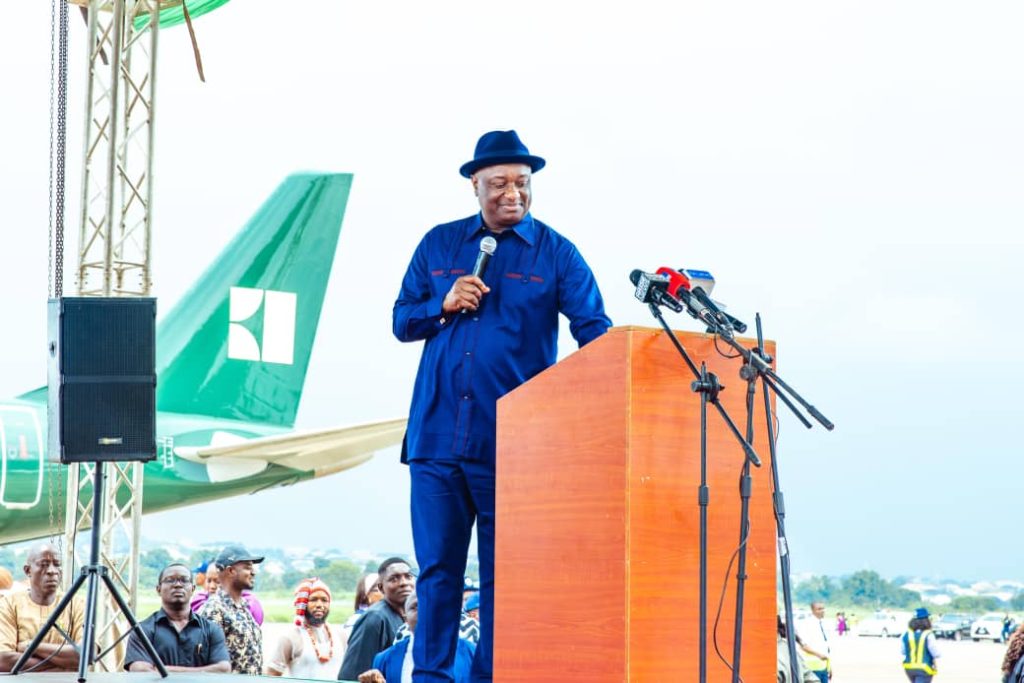
In his remarks, Minister Keyamo, who was represented by the Director of Special Duties at the Federal Airports Authority of Nigeria, Mrs Obiageli Orah, emphasised that aviation remains a “necessary catalyst for economic growth”, noting that discussions about the industry are inseparable from Nigeria’s economic progress and global relevance.
He described the lecture theme as “very dear to my heart”, acknowledging the strategic importance of enabling Nigerian airlines to compete effectively on the London route, a market heavily dominated by foreign carriers for decades.
According to him, the administration has taken deliberate steps to boost domestic airline capacity through international engagements and bilateral negotiations.
“We have engaged countries around the world in order to maximise our bilateral Air Service Agreements (BASA) with them in favour of our indigenous airlines,” he noted.
The Minister disclosed that the government’s pursuit of aeropolitical advantage had extended to global manufacturers and aircraft leasing firms such as Boeing, where discussions were held to strengthen partnerships and open new opportunities for Nigerian operators.
“Our passion to support our domestic airlines also took us to some aircraft manufacturers and lessors like Boeing and others to advance the new narrative of collaboration for our people,” he explained.
Keyamo added that the administration had prioritised creating policies and an enabling environment that allow Nigerian carriers to grow sustainably, operate profitably, and expand international networks without undue constraints.
Reaffirming his ministry’s commitment, he stated:
“Let me reassure you all that we are resolved to continue to play the international aeropolitics to ensure that our indigenous airlines sustain the gains already made even as they continue to expand their routes while delivering excellent services.”
The Director-General of Civil Aviation, who was represented by the Regional Manager of NCAA, Mrs Olubukola Aduragbemi Teriba, described the London route as a symbolic and highly contested space where only strategically supported airlines can thrive.
“This subject strikes at the very heart of our national aviation story,” he stated. “International aeropolitics has never been neutral. It is shaped by power, by strategy, and by national pride.”
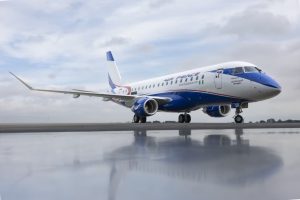
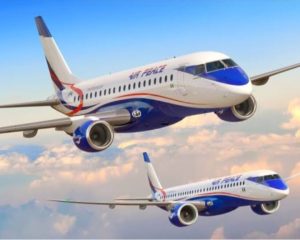
He cited the long-standing dominance of foreign carriers, noting that despite their strength, Nigerian operators such as Air Peace have now stepped up to challenge the status quo.
“Their presence on the London route is more than a commercial venture; it is a declaration that Nigeria is ready to take its rightful place in the skies,” he said.
He insisted that although the challenges remain significant – imbalanced BASAs, steep operational costs, intense competition and systemic constraints – Nigeria has both the capacity and the determination to compete favourably.
The DGCA underscored the NCAA’s role in sustaining Nigeria’s strong global aviation safety profile, which is essential for building foreign confidence in Nigerian carriers.
“As regulators, we at the Nigeria Civil Aviation Authority will continually ensure Nigeria’s compliance rating in aviation safety and security by ICAO is impressive in order to give our operators a fair chance in the scrutiny by the international community,” he said.
He stressed that the NCAA will continue to push for fairness, reciprocity, and globally aligned regulations that protect Nigerian interests.
The DGCA highlighted the need for a unified national strategy involving government ministries, regulators, airport authorities, diplomats and industry stakeholders.
“The success of Nigerian carriers cannot be the task of one agency or one airline,” he said. “It requires us to believe in our own capacity, to support our airlines, and to demand the reciprocity and respect that our nation deserves.”
He added that Nigeria already possesses the required talent, market strength, and aviation potential to become a dominant force on global routes, provided sustained effort and collaboration continue.
“With determination and collective will, there is no route, no corridor and no global stage where Nigerian carriers cannot excel,” he declared.
Both Keyamo and the DGCA praised SAPTCO Communication Ltd for initiating an intellectual and policy-driven platform that brings critical national aviation issues to the forefront.
They maintained that discussions on international aeropolitics must continue, as they greatly influence Nigeria’s economic resilience and global standing.
The two aviation leaders reaffirmed that the success of Nigerian airlines on the London route is not just achievable but inevitable – with the right mix of political will, regulatory consistency and industry-wide unity.
About The Author