The Minister of Aviation and Aerospace Development, Festus Keyamo, has said Nigeria’s failure to execute critical infrastructure projects when they were first conceived has resulted in massive cost increases, citing the proposed second runway at the Nnamdi Azikiwe International Airport.
Keyamo attributed the escalation to prolonged delays, including legislative bottlenecks, and warned that postponing infrastructure development could impose enormous financial burdens on the country.
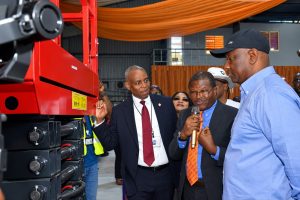
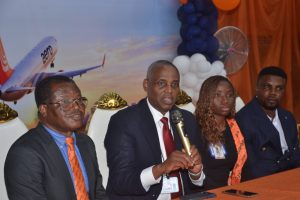
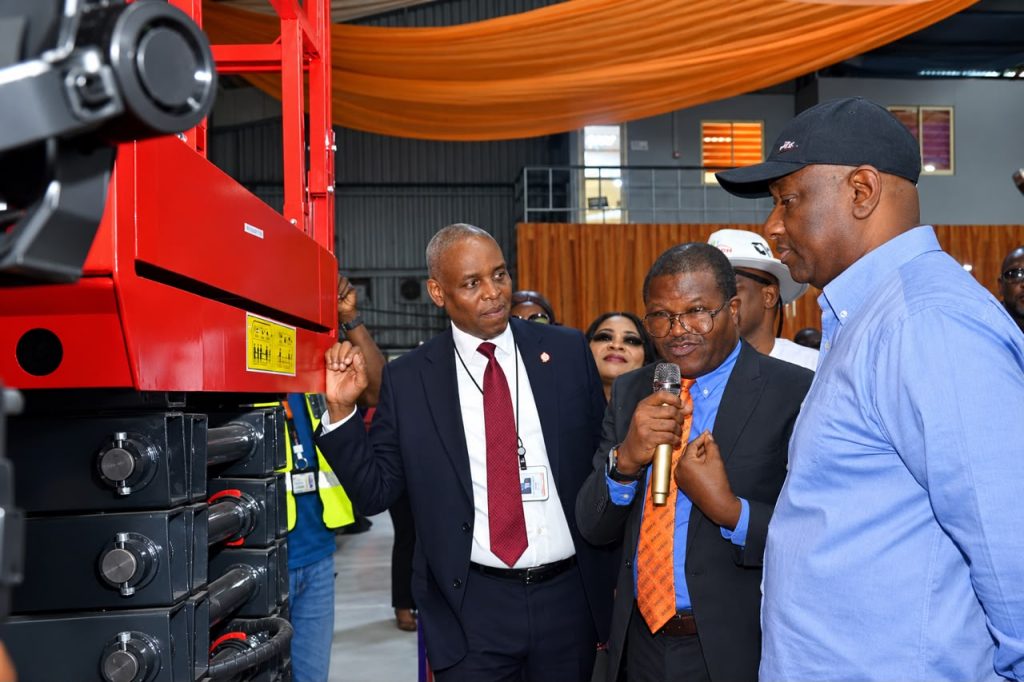
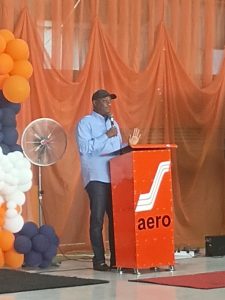
The minister spoke at the 67th anniversary celebration of Aero Contractors at the airline’s hangar at the General Aviation Terminal of the Murtala Muhammed Airport, Lagos.
He used the occasion to examine the history of Nigeria’s aviation industry, the country’s infrastructure deficit and the economic policies he said had constrained government’s ability to invest in major projects over the years.
Keyamo said the proposed Abuja second runway had become a striking example of what could happen when important infrastructure projects were delayed.
He recalled that the project had been under discussion since the administration of former President Olusegun Obasanjo, but was subsequently stalled after the National Assembly raised questions about its projected cost.
“Why would we not build the second runway all along? Don’t forget that this controversy started during Obasanjo’s tenure. The second runway. I remember reading it then, I didn’t know I was going to come to this sector, but I followed the arguments and the debates then.
“The National Assembly altered that project because they said $45 billion, I’m sure you are old enough in the sector to know, and those who are old enough, that $45 billion was too big, was too much to do the second runway.
“We could not raise $45 billion at that time to do the second runway. Fifteen years later, nearly 20 years later, it’s now costing us nearly $400 billion.
“That is the danger in delaying the building of infrastructure, because the prices will go up every day.”
The minister said the lesson from the Abuja runway was applicable across the economy, stressing that the cost of infrastructure would continue to rise if governments failed to take decisions and provide funding when projects were due.
He linked the infrastructure deficit to Nigeria’s historical dependence on oil revenues and the large sums committed to subsidies.
According to Keyamo, successive governments struggled to fund major infrastructure projects because a significant portion of the country’s oil earnings was used to subsidise petrol, while foreign exchange was also sold at what he described as suppressed rates.
“We could not raise money to do anything in the last 50 years. Because there was no money. The thing we managed to do was that we borrowed money from the Chinese, and we are paying back that money.
“Why was there no money? The simple thing is that all the monies we’re earning in this country from oil was going to subsidies. Very simple. Our major earnings from oil, when we make money, all the monies went to subsidising PMS.”
He argued that the aviation industry was among the sectors that suffered from the lack of resources for infrastructure, pointing to the deterioration of major airport facilities.
Keyamo said the old terminal of the Murtala Muhammed International Airport, Lagos, had been in service for decades and that the government was now undertaking major reconstruction after years of deterioration.
He said the Federal Government had secured $500 million for the Lagos airport reconstruction, insisting that the money was raised without borrowing.
“In less than two years, after we removed subsidies from both money and oil, in less than two years, the President raised $500 million to rebuild Lagos. Not money borrowed. Not money borrowed.
“Let’s be honest. Forget about what the politicians are saying. You know, we’re all politicians. What I am saying in actual fact, that is what happened. The President raised $500 million to rebuild the Lagos airport.”
The minister also defended the importance of maintaining strong foreign reserves and improving the country’s liquidity, arguing that macroeconomic stability was necessary to attract foreign investment and generate employment.
He rejected the argument that improvements in foreign reserves were disconnected from the welfare of ordinary Nigerians, saying investment and infrastructure were ultimately responsible for creating jobs.
“What will bring investors? What will bring jobs? Tell me. If not that the foreign investors see that you are healthy, your economy is healthy, your foreign reserves are healthy, and they will come into the country, they’ll build infrastructure, they’ll bring in money, they’ll bring jobs.
“That is what brings jobs. Jobs don’t fall from heaven. Jobs come as a result of either infrastructure you are building, or because of investments.”
He said the ongoing Lagos airport project was already creating employment, noting that more than 2,000 Nigerians were working daily on the construction site in different capacities.
According to him, the workforce included welders, plumbers and other artisans and workers, illustrating what he described as the direct economic benefits of infrastructure investment.
Keyamo also disclosed that the government was working on plans to connect the Lagos airport to the rail network through the Red Line.
He said the proposed rail link would run from Ikeja through the General Aviation Terminal and other points before connecting to the new international terminal, with an underground station planned at the airport.
The minister argued that such projects would not be possible without the fiscal changes introduced by the Federal Government.
He also defended the removal of subsidies, saying the policies were not introduced arbitrarily but had been contemplated by successive administrations that lacked the political capacity to implement them.
“These policies were not whimsical policies. They were policies that every government had been trying to implement for 50 years but because of the resistance of labour, because of the resistance of so many, they could not implement it.
“So they were not whimsical policies that somebody got up. They were policies that everybody had been waiting for. You have to do this. You have to do this.”
Beyond Lagos, Keyamo said the Federal Government was extending its infrastructure programme to other airports.
He listed the planned rehabilitation of the Kano airport runway and the resurfacing of the runway at Akure Airport among projects being pursued by the government.
He also said work had been completed on the new terminal at Akure and that further funding would be needed to address infrastructure requirements across the sector.
While infrastructure remained a major part of the government’s aviation agenda, the minister said policy reforms were equally important, particularly in improving Nigerian airlines’ access to aircraft.
He highlighted the government’s efforts around the Cape Town Convention and IDERA, which he said were intended to strengthen confidence in Nigeria’s aviation market and make aircraft leasing more accessible to local operators.
Keyamo said the policy changes were already contributing to the emergence of new airlines and the expansion of existing carriers.
“Now, look at what is happening. Because of that, you have subnationals coming up now with airlines all over the place. It has never happened by talk of policies.
“A new agreement has come. Sokoto Air is about to start. Bayelsa Air has started. The Bayelsa airline is about to start something too. They are coming up now. One, because they have more money. Two, because the policy of access to aircraft is also helping.”
He pointed to the expansion of Nigerian airlines into regional markets as another indication of the changing aviation landscape.
Keyamo said Enugu Air had commenced flights to Cameroon, while Ibom Air had expanded into West Africa and was preparing for further expansion into Central Africa.
He said the government’s objective was to create an environment where Nigerian carriers could operate sustainably and expand their international footprint.
The minister also used the anniversary to commend Aero Contractors for its longevity, describing the airline’s survival since 1959 as a remarkable example of resilience in an industry characterised by repeated airline failures.
He said more than 100 airlines had ceased operations in Nigeria over the years, citing carriers such as Okada Air, Chanchangi Airlines, Concord Airlines and ADC Airlines among those that had disappeared from the market.
Against that background, he described Aero Contractors’ 67-year journey as more than a corporate achievement.
“This is the story of Aero Contractors. From 1959, incredible, 1959, to where we are today, Aero Contractors have survived, have survived through the storm.
“And especially in those years, we have witnessed the highest rate of mortality of airlines in Africa, in Nigeria. But in the midst of all of this, Aero Contractors survived.
“And here we are today, celebrating Aero Contractors. So, like you rightly said, this is the pride of Nigeria. This is not just your success, it’s a story of resilience, it’s a story of the Nigerian spirit, it’s a story of success.”
Keyamo urged other Nigerian airlines to study Aero Contractors’ experience and learn from its ability to remain in business despite the industry’s difficult operating environment.
He said Aero Contractors’ endurance should serve as an example to the wider aviation sector and expressed the hope that the airline would eventually expand into international operations.
“The next big step for everyone, the next big step, I want to see your double I to start flying internationally. And I pray that happens to everyone.”
The minister’s remarks placed infrastructure financing, economic policy and airline sustainability at the centre of the aviation industry’s future, arguing that the sector’s growth would depend not only on airlines but also on the government’s ability to provide infrastructure and establish policies capable of attracting investment and supporting local operators.
About The Author