…Says verified information builds trust, confidence
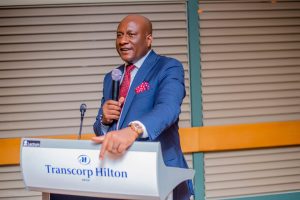
The Executive Chairman of United Nigeria Airlines, Prof. Obiora Okonkwo, has said that speaking the truth is the best reputation management strategy for any organisation.
Speaking during a dialogue on Responsible Business Communication: Building Trust and Financing Investments for Sustainable Human Development at the 2026 World Public Relations Forum (WPRF) in Abuja on Tuesday, the UNA boss maintained that organisations must not confuse reputation protection with withholding or manipulating facts, warning that attempts to conceal the truth could eventually cause greater damage than the original crisis.
He added that telling verified truths demonstrates respect for stakeholders and helps build confidence in an organisation, irrespective of how uncomfortable the information might be.
Recounting an incident in which UNA diverted to Asaba instead of Abuja, Okonkwo explained that the aircraft was scheduled to fly from Lagos to Abuja but landed in Asaba following an error by the dispatcher, who mistakenly entered Asaba as the destination in the flight documentation.
He said the pilots followed the destination indicated in the documents and landed accordingly, while the cabin crew, believing they had arrived in Abuja, welcomed passengers to the Federal Capital Territory.
According to him, the incident itself was not necessarily a major crisis until the airline’s communication team issued an inaccurate explanation.
Okonkwo said the airline’s communication team, in an attempt to protect the company’s reputation, attributed the incident to bad weather in Abuja, despite the fact that the aircraft had landed in Asaba because of an error in its flight documentation.
Okonkwo cited another experience involving a passenger who threatened never to fly United Nigeria Airlines again, not because of a delayed flight but because the airline departed earlier than its advertised time.
He said the passenger complained that the airline had advertised an 11:30 a.m. departure but took off at 11:20 a.m.
He said: “A typical Nigerian traveller has his mind set on the timely departure of the airline, and if anything happens, you have to communicate the truth.
You may have an AOG, technical issues, and sometimes that message doesn’t really sink. I had a passenger last week who sent me a message saying they will never fly United Nigeria Airlines anymore and I said, why?
He said, because they left on time.
He said United Nigeria Airlines advertised departure for 11:30am but departed at 11:20am, and as the chairman, I was actually worried about how to respond.
“I wanted to get angry, I wanted to shout back at him. But again, my experience being a member of this forum came into play, and I simply sent him a message saying, ‘I apologise for United Nigeria Airline leaving on time.’ That was my answer. He never got back.”
He continued: “The best word of public relations is to tell the truth and challenge responsibly. Whenever the truth is told, it builds trust, it builds confidence, and it also shows respect for stakeholders.”
Professor Okonkwo further emphasised that crisis communication should not be regarded as the exclusive responsibility of corporate affairs or public relations departments, insisting that organisational leadership must take collective responsibility for communicating with stakeholders during difficult situations.
“Communication is not only the responsibility of the corporate affairs department. When there is a crisis and there is a need for proper communication, leadership quality is also called into question. It becomes a collective responsibility of leadership,” he stated.
He urged airlines and other service providers to deploy all available communication channels, including airport information displays, information technology platforms and social media, to keep customers informed about operational developments.
He also advocated prompt disclosure of issues affecting flight operations, including industrial actions and safety concerns.
“Do you have a strike? Announce that you have a strike. That’s why we are disrupting our services. Do you have a safety issue? Announce!” he said.
While speaking , the Minister of Finance and Coordinating Minister of the Economy, Taiwo Oyedele, said building public trust sometimes required organisations and government institutions to adhere strictly to communicated timelines, whether they were delivering earlier or later than expected.
He said the passenger’s complaint was a reminder that organisations must explain deviations from what they had communicated, even when such deviations appeared to be positive.
“Sometimes building trust requires that you be on time, not earlier and not later. And if you go earlier than you communicated previously, you must explain,” Oyedele said.
Drawing a parallel with government revenue performance, the minister said some departments under the Ministry of Finance occasionally exceeded their revenue targets without providing explanations.
He said where an agency projected revenue of 10 but generated 12, it was important to establish whether the original target was too conservative or whether the additional revenue was a one-off occurrence. “I need to know whether your 10 was too conservative. Maybe it should have been 15. I also need to know whether this extra 2 is sustainable or whether it’s one-off,” he said.
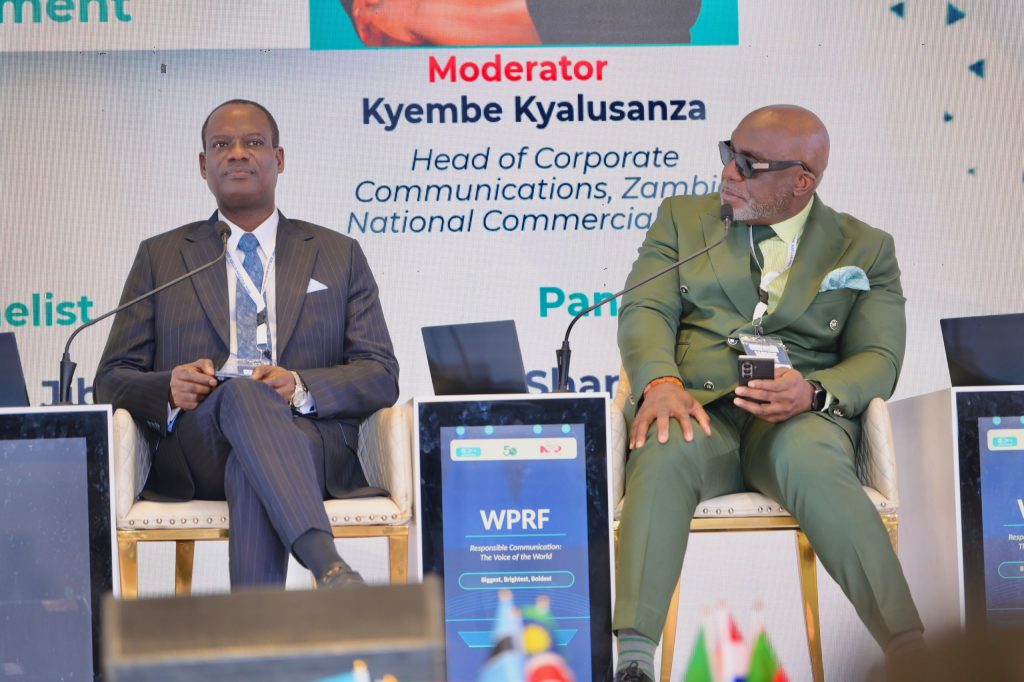
The session also featured Edith Jibunoh, Director of External Affairs at the World Bank Group, and Sharon Ezzeldin, founder of Honor Public Relations in the United Kingdom. It was moderated by Kyembe Kyalusanza, Head of Corporate Communications at Zambia National Commercial Bank (Zanaco).
About The Author