In a decisive move to strengthen its aviation industry and unlock new frontiers in aerospace development, the Federal Government of Nigeria has entered into a landmark Memorandum of Understanding (MoU) with global aircraft manufacturer Airbus.
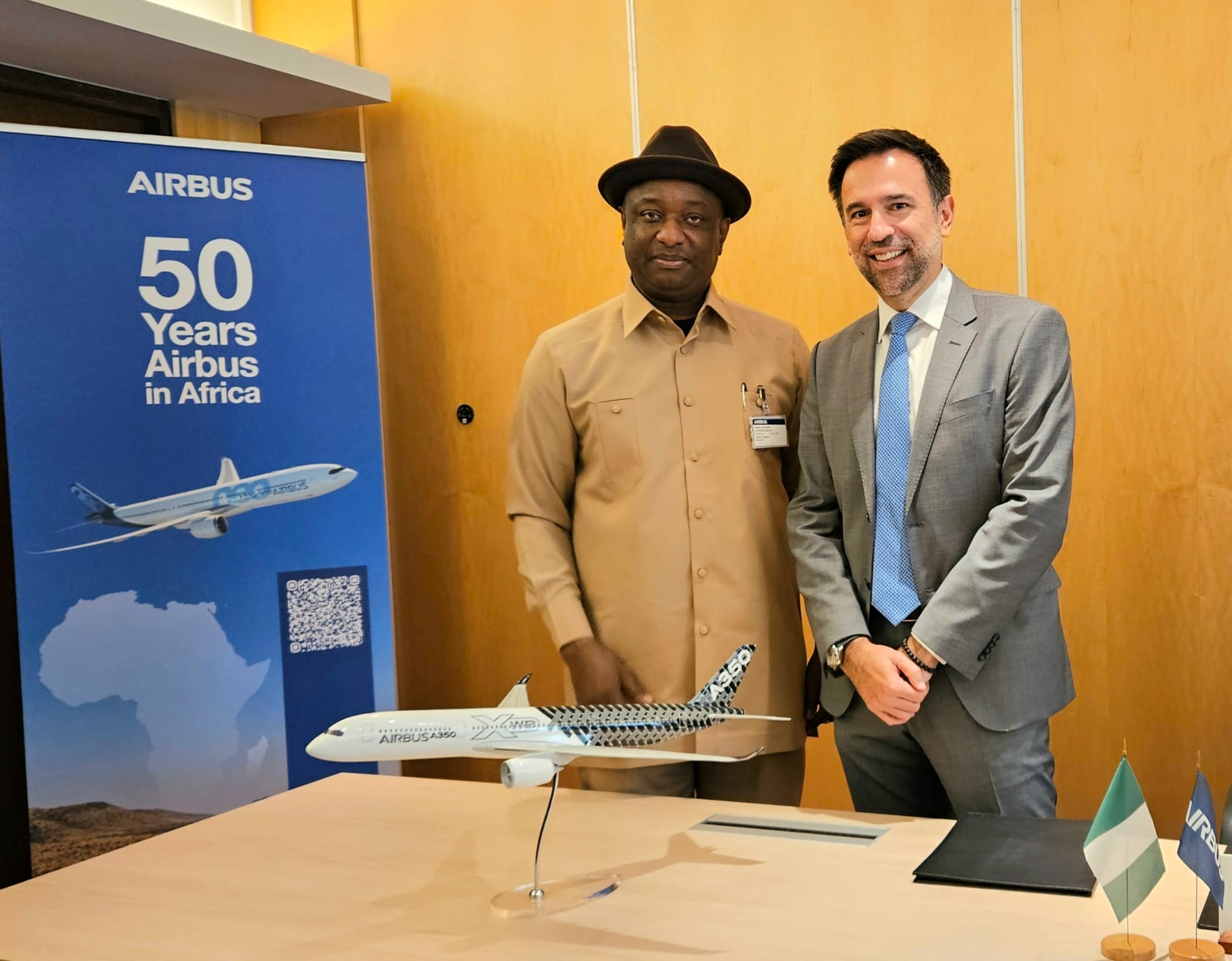
The agreement was signed at the company’s headquarters in Toulouse during an official visit by Nigeria’s Minister of Aviation and Aerospace Development, Festus Keyamo.
The pact signals a renewed push by the Nigerian government to modernise its aviation architecture, deepen technical expertise, and position the country as a competitive force within Africa’s rapidly evolving aerospace landscape.
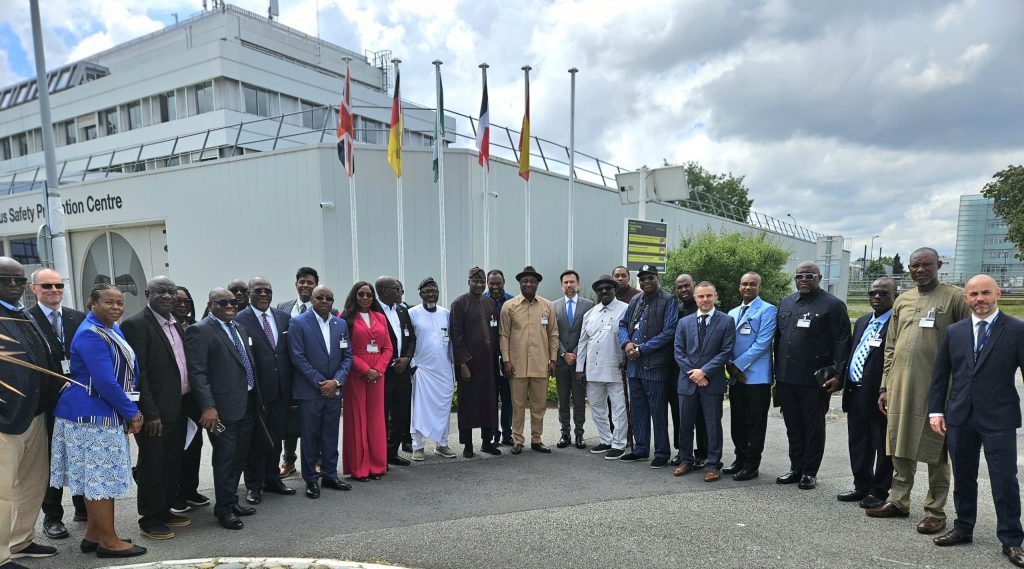
The minister was joined by a formidable delegation of senior aviation officials, reflecting the government’s seriousness about the partnership.
Among them were Permanent Secretary Mahmud Adam Kambari; Director General of the Nigerian Airspace Management Agency, Engr. Farouk Umar; Director of Air Traffic Management, Mohammed Ahmed Tijjani; Director of Air Safety Administration, Engr. Michael Chukwu; Director General of the Nigerian Civil Aviation Authority, Capt. Chris Najomo; and Director of Aerodrome and Air Standards, Ahmed Abba.
Their presence highlighted the multi-agency approach Nigeria is adopting to ensure that the benefits of the agreement permeate all facets of the aviation ecosystem.
At its core, the MoU establishes a framework for collaboration between Nigeria and Airbus in key areas such as infrastructure development, operational efficiency, and workforce capacity building.
The partnership is designed to provide Nigeria with access to Airbus’ global expertise, thereby accelerating reforms and innovation within the sector.
Describing the agreement as transformative, Keyamo said it aligns squarely with the Federal Government’s broader vision of creating a sustainable and globally competitive aviation industry.
“This partnership marks a critical step in our journey towards building a robust aeronautical ecosystem. We are proud to collaborate with Airbus in unlocking the immense potential of Nigeria’s aviation sector,” he stated.
In his remarks, Airbus President for Africa and the Middle East, Gabriel Semelas, underscored Nigeria’s pivotal role in the continent’s aviation growth story.
“Nigeria represents a cornerstone of Africa’s aviation future, given its demographic strength and economic momentum. Through this partnership, we aim to harness local capabilities while supporting long-term, sustainable growth,” Semelas noted.
The MoU outlines a broad spectrum of technical cooperation. Airbus will provide critical support in areas such as aviation market analysis, pilot and crew training, and maintenance expertise.
Advisory services will also be extended to help Nigeria strengthen its Maintenance, Repair, and Overhaul (MRO) capabilities – an essential component for reducing reliance on foreign technical services.
Additionally, both parties will explore opportunities in Sustainable Aviation Fuel (SAF), a key pillar in global efforts to reduce aviation emissions. This aspect of the agreement places Nigeria on the path towards participating in greener, more environmentally responsible aviation practices.
The partnership comes at a time when Africa’s aviation sector is poised for significant expansion. Airbus projections indicate that by 2044, the continent will require approximately 1,490 new aircraft to meet rising passenger and cargo demand.
Equally pressing is the need for skilled personnel. Estimates suggest Africa will require over 20,000 pilots, 20,000 engineers, and 21,000 cabin crew members in the coming decades.
The Nigeria-Airbus collaboration is therefore expected to play a crucial role in bridging this talent gap through structured training and knowledge transfer.
Beyond aviation, the MoU carries broader economic implications. By fostering local expertise, enhancing infrastructure, and encouraging innovation, the agreement is expected to generate employment, stimulate investment, and support technological advancement across related sectors.
It also reinforces Airbus’ longstanding commitment to Africa, where it maintains a workforce of approximately 3,000 employees and continues to expand its footprint through strategic partnerships.
For Nigeria, the agreement represents more than a bilateral partnership – it is a statement of intent. With Africa’s aviation market on the cusp of transformation, the country is positioning itself as a central hub for air transport, logistics, and aerospace innovation.
About The Author