

Nigeria’s aviation sector has recorded a remarkable turnaround in safety performance, achieving a 91.4 per cent Effective Implementation (EI) score following the conclusion of the International Civil Aviation Organization Coordinated Validation Mission (ICVM) held between April 15 and 22, 2026.
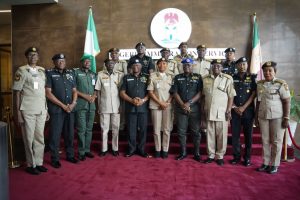
The announcement was made during the closing session of the audit at the headquarters of the Nigerian Civil Aviation Authority (NCAA) in Abuja, where the Director-General of Civil Aviation (DGCA), Chris Najomo, highlighted the significance of the achievement for the country’s aviation safety architecture.
Capt. Najomo described the ICVM as a rigorous and independent validation process that evaluates how effectively a nation implements global aviation safety standards.
He noted that the exercise provided a holistic assessment of Nigeria’s safety oversight system, identifying institutional strengths while drawing attention to gaps that require further improvement.
He added that the audit also considers external variables that could influence aviation safety, thereby offering a comprehensive framework for strategic planning and regulatory enhancement.
While expressing satisfaction with the 91.4 per cent score, the DGCA clarified that the results remain subject to a further layer of validation by ICAO’s Safety and Air Navigation Oversight Audit Section.
He, however, voiced confidence that Nigeria’s rating would continue to improve as the country sustains momentum in implementing corrective measures and addressing identified deficiencies.
According to him, “The progress recorded so far is encouraging, and we are confident that the final outcome will reflect even greater improvement in the status of the Protocol Questions.”
Capt. Najomo commended the ICAO audit team for their professionalism and thoroughness, noting that both onsite and virtual participants contributed significantly to the credibility of the exercise. He assured stakeholders that all recommendations put forward would be carefully reviewed and fully implemented in line with international best practices.
He also expressed appreciation to the Federal Ministry of Aviation and Aerospace Development, led by the Minister, Festus Keyamo, for its unwavering support and strategic leadership throughout the audit process.
The DGCA further acknowledged the collaborative efforts of major aviation agencies and stakeholders, including the Federal Airports Authority of Nigeria, Nigerian Safety Investigation Bureau, Nigerian Meteorological Agency, and the Nigerian Airspace Management Agency, as well as airline operators, service providers, and NCAA personnel. Their collective dedication, he said, was instrumental in delivering the impressive outcome.
Special recognition was also given to the Banjul Accord Group Aviation Safety Oversight Organisation for providing technical expertise and support before and during the mission, further strengthening Nigeria’s audit preparedness.
The new rating marks a substantial improvement from the country’s performance in the ICAO Universal Safety Oversight Audit Programme – Continuous Monitoring Approach (USOAP-CMA) conducted in August–September 2023, when Nigeria recorded a 70 per cent score – below the global benchmark.
In response to that earlier outcome, Nigerian aviation authorities embarked on a comprehensive reform process, including detailed root cause analysis and the development of targeted Corrective Action Plans. These initiatives, subsequently validated by ICAO, created a clear pathway for addressing compliance gaps and enhancing safety oversight.
Industry experts believe the 91.4 per cent score is a strong indicator of Nigeria’s renewed commitment to aviation safety and regulatory excellence. The achievement is expected to boost international confidence, attract greater investment in the sector, and reinforce Nigeria’s standing within the global aviation community.
With sustained reforms and continued collaboration among stakeholders, the country is well-positioned to consolidate its gains and advance towards becoming a benchmark for aviation safety in Africa.
About The Author