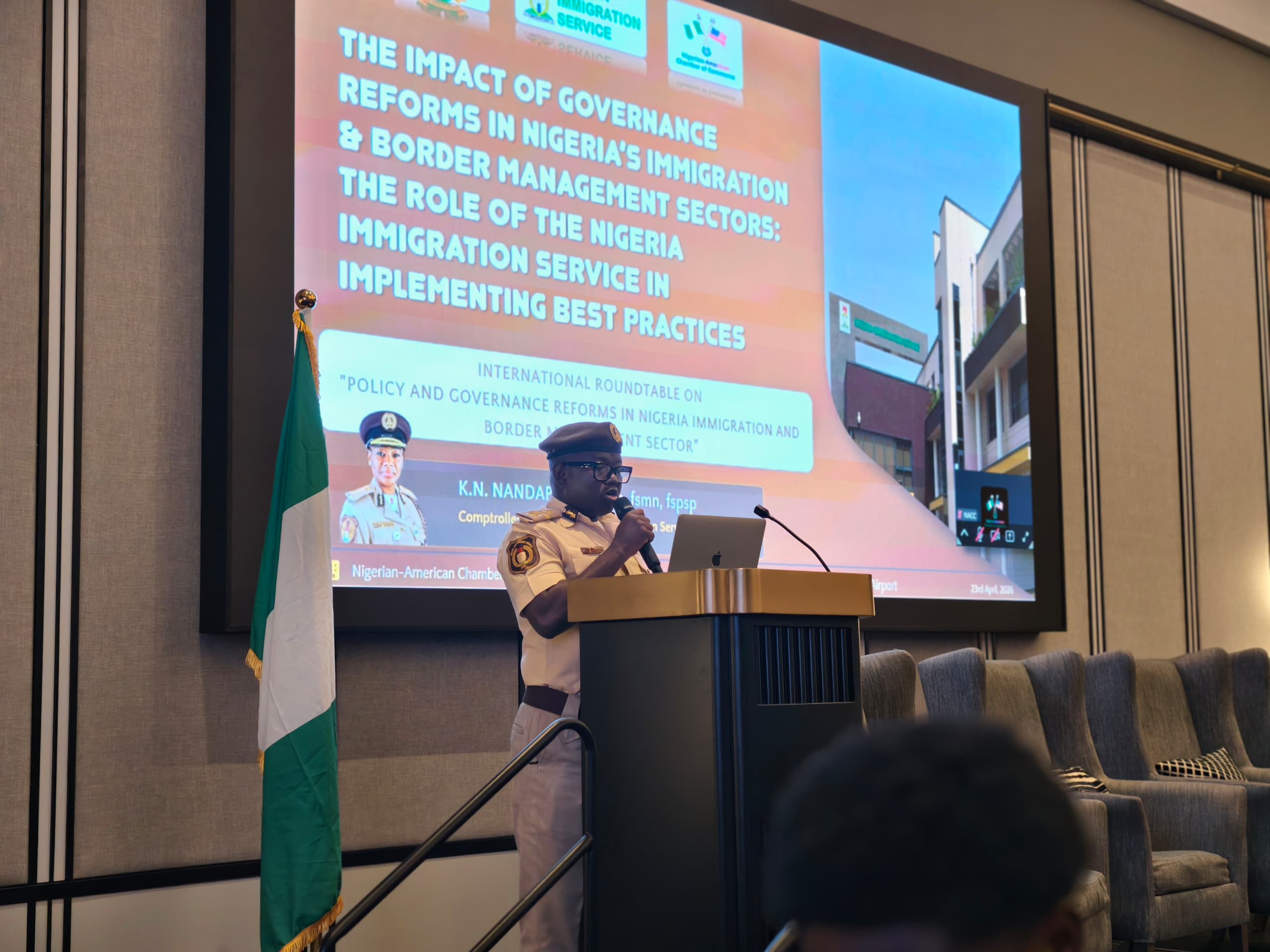
Comptroller General of Nigeria Immigration Service NIS Kemi Nandap says the Service has introduced a number of innovative reforms geared towards improving efficiency, transparency and investors confidence.
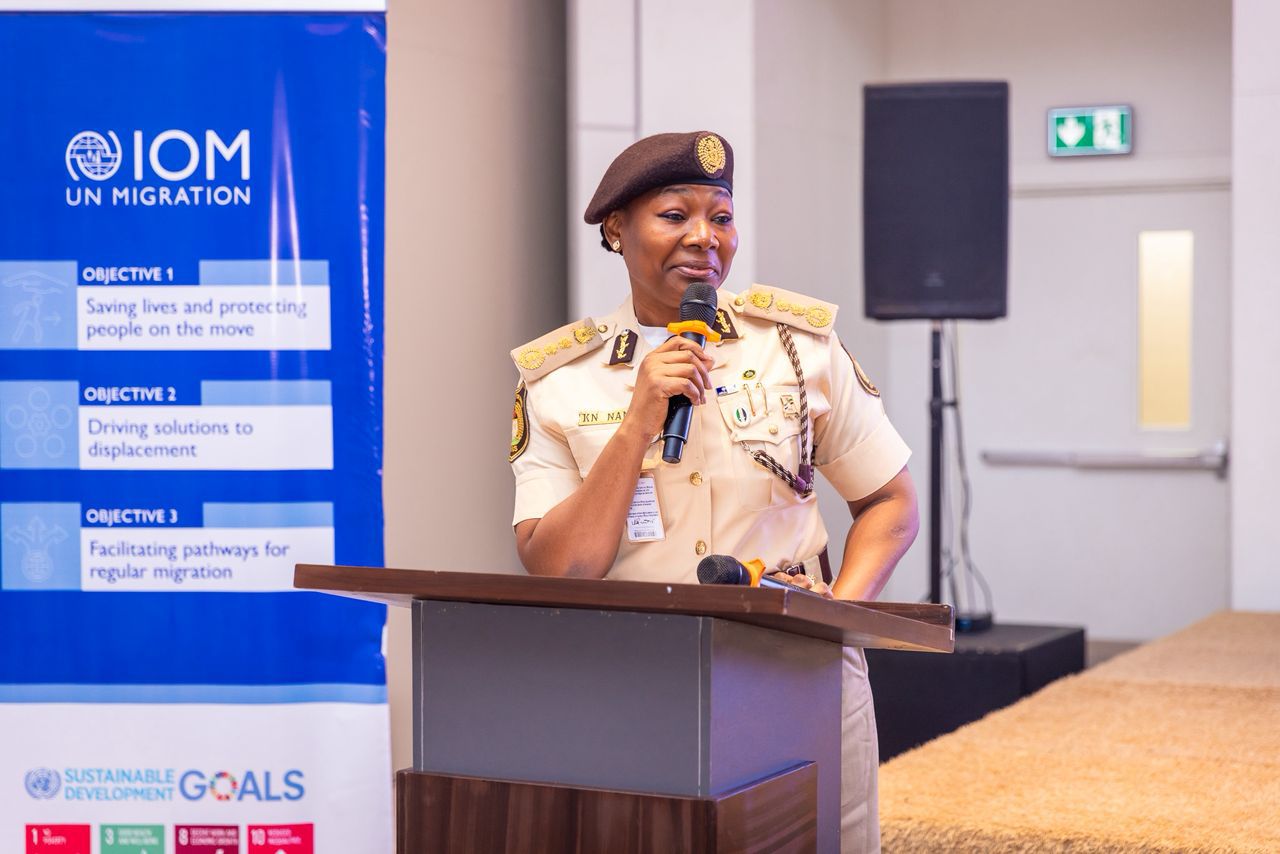
Nandap made this known while delivering a paper, as the guest presenter at an international roundtable on policy and governance reforms in Nigeria’s Immigration and Border management sector.
The CG who was represented by the Assistant Comptroller General ACG Zone A, Mohammed Adamu noted that Nigeria migration and border management has evolved rapidly driven by globalisation, transnational organised crimes, irregular migration, economic integration and global standards.
“Our governance reforms aims to balance security facilitation of legitimate movement and human rights, while aligning with national development priorities.”
She noted that the reforms align with the renewed hope agenda of President Bola Tinubu and that the reforms are anchored on four major objectives.
These reform objectives include: Strengthen National Security, through enhanced border security and advanced screening systems with modern technologies.
Promote Economic growth and Global competitiveness, by facilitating the entry of legitimate investors, entrepreneurs and skilled professionals.
Combat Irregular migration,other transnational crimes through clear enforceable visa procedures.
Enhance Service delivery by leveraging suitable technology and digital tools for application processing, decision making, identity verification, and security checks.
Nandap stated that some of the highlights of the NIS Reforms include Updating the immigration system to enhance Nigeria’s global competitiveness
-Strengthen National Security and encourage economic growth built on transparency, accountability and fairness
-leverage advance technology solutions
Address needs of tourist, business visitors, students and professionals
Highlights the importance of reciprocity, encourage regional and international collaboration and remove ambiguity on requirements and processes by providing clear requirements and procedures.
Nandap noted that some strategic policies and reforms that have strengthened the Service security mobility and competitiveness for economic development are
– passport and visa reforms
– Expatriate Management
– Border security and facilitation
– Business facilitation and competitiveness drive.
She further disclosed that the passport reforms have moved from automated, to enhanced passport adding that the reforms are ongoing as it cuts across border management and security.
She noted that “The NIS is committed to implementing governance that make our borders secure, our services efficient, and our migration system humane and evidence based. Success depends on coordinated leadership, sustained investment, technology safeguards, and inclusive partnership across government, private sector and international partners.”
Permanent Secretary ministry of Interior Magdalene Ajani in her presentation noted that since Nigeria’s future depends on ability to manage our borders, they must become a platform for enabling legitimate movement trade, investment and innovation.
Ajani noted that under the Renewed Hope Agenda of President Bola Tinubu, the Ministry of Interior is spear heading the transformation of Nigeria borders governance system from legacy protocols to a globally competitive technology driven smart architecture.
On his part, the Director of state security who was represented by Steve Olufemi Ojelade stated that the DSS utilise immigration with border⁸ patrol.
He stated that securing a far stretch of Nigerian border transcends beyond manning legal entry points and deploying ground patrols
He noted that the current immigration reforms revolves around digitisation and data driven border control which entails the deployment of systems like real time travel data capture, E-Visa, Automated Entry-Exist card, resulting in addressing bureaucratic bottlenecks, speady passenger facilitation over intelligence.
He further disclosed that the reform also entails digitisatilise documentation of operational aspects of mobile border patrol teams and rapid response units as well as improved surveillance.
Integrated border governance via inter agency collaboration with NIS, Customs as well as other agencies
He stressed that these inputs have actually imparted the DSS, as they utilise immigration generated intelligence speed for early warning, identity verification and migration intelligence.
The roundtable was organised by the Nigerian -American Chamber of Commerce in collaboration with the Nigeria Immigration Service which took place in Lagos has as its theme “Deconstructing the immigration and border management governance and policy reforms in Nigeria.”
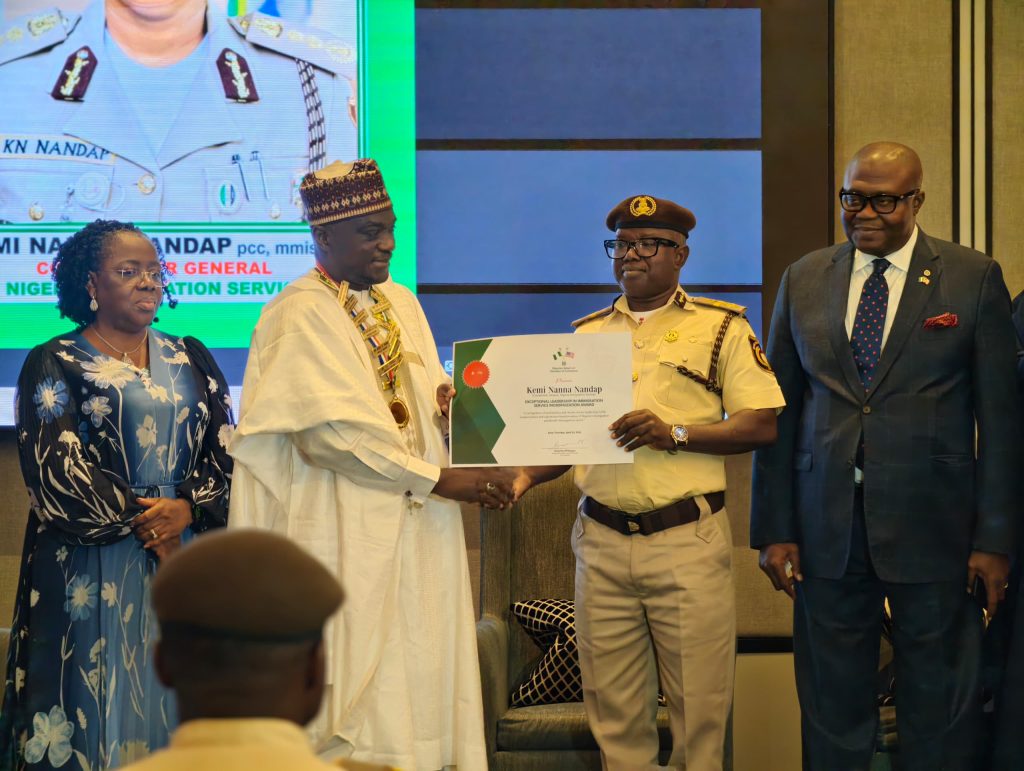
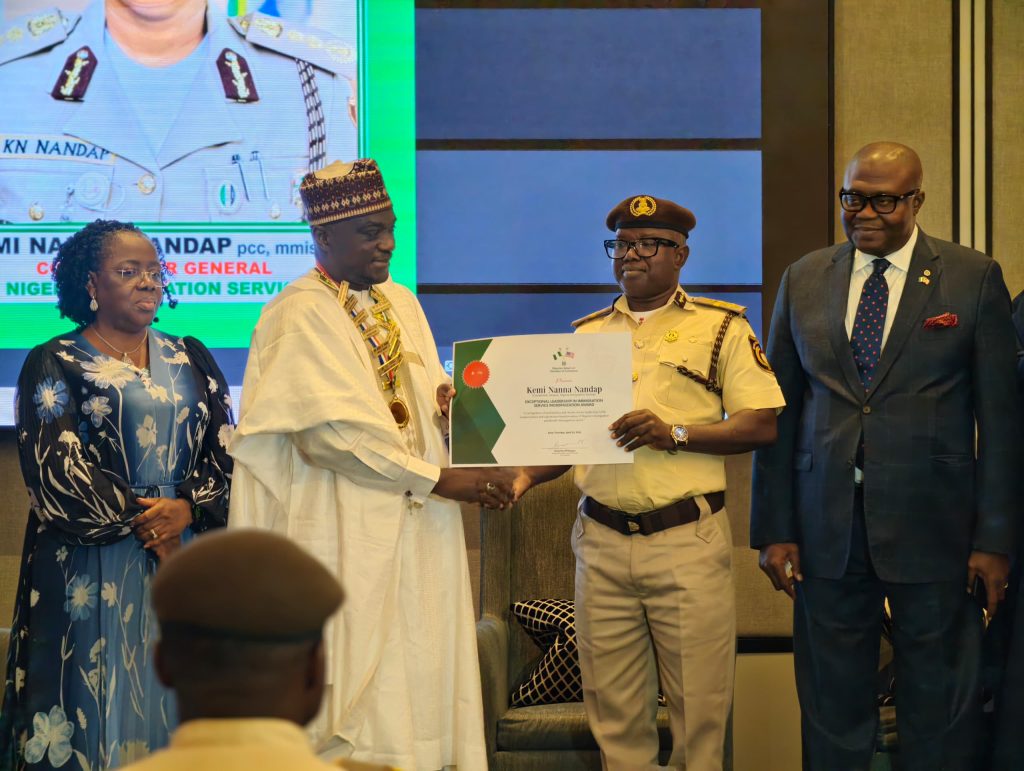
Comptroller General NIS Kemi Nandap, was given an award for exceptional leadership in immigration service modernisation.
The Award was recieved on her behalf by the ACG Zone A Mohamed Adamu
About The Author