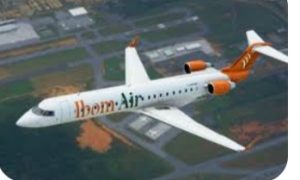
Nigeria’s aviation fuel pricing debate took a new turn on Thursday as the Major Energies Marketers Association of Nigeria (MEMAN) pushed back against claims by the Airline Operators of Nigeria (AON) regarding the soaring cost of Aviation Turbine Kerosene (Jet A1), describing the reported N3,300 per litre price as significantly above prevailing market realities.
In a formal response to AON’s earlier correspondence, MEMAN acknowledged the mounting financial strain confronting domestic airlines but attributed the surge in fuel costs primarily to global disruptions and the complex logistics associated with aviation fuel supply.
The letter, signed by MEMAN’s Executive Secretary and Chief Executive Officer, Clement Isong, conveyed the association’s understanding of the precarious situation facing airline operators, noting that the volatility in jet fuel prices has far-reaching implications not only for aviation but also for the wider Nigerian economy.
According to the association, geopolitical tensions in the Middle East have continued to distort global energy markets, particularly affecting the supply and pricing of middle distillates such as Jet A1 and diesel.
These disruptions have, in turn, driven up inland transportation and distribution costs across Nigeria by as much as 50 per cent.
MEMAN stressed that beyond international market forces, the domestic handling of aviation fuel comes with unique cost burdens. It explained that Jet A1 distribution is governed by stringent safety and quality standards, requiring specialised infrastructure, dedicated equipment, and meticulous handling procedures.
These factors, the association noted, inevitably make aviation fuel more expensive to transport and deliver compared to other petroleum products.
While defending the structural realities behind pricing, MEMAN insisted that its members remain committed to improving efficiency within the downstream sector.
It highlighted ongoing industry collaborations, including technical training, operational benchmarking, and knowledge-sharing initiatives designed to optimise logistics and reduce avoidable costs.
However, the association took issue with AON’s claim that some marketers were selling Jet A1 at N3,300 per litre. It described the figure as inconsistent with findings from its internal market survey, which indicated significantly lower average prices across the sector.
Without naming specific suppliers, MEMAN urged airline operators encountering such high rates to exercise their commercial discretion by sourcing fuel from alternative vendors offering more competitive pricing.
It reaffirmed that its members operate within a market-driven framework and do not engage in coordinated pricing, in line with competition regulations.
In a strategic recommendation, MEMAN advised airlines to reconsider their procurement models by shifting from spot market purchases to structured, long-term supply contracts.
Such arrangements, it argued, would help airlines achieve greater price stability, reduce exposure to daily market fluctuations, and enhance financial planning.
The association also disclosed that it is actively engaging with regulatory bodies, particularly the Nigerian Midstream and Downstream Petroleum Regulatory Authority (NMDPRA), to explore policy interventions that could cushion the impact of rising fuel costs on the aviation industry.
It noted that several proposals have already been submitted as part of efforts to stabilise the market and ensure sustainability.
Offering a glimmer of hope, MEMAN indicated that early market signals suggest a potential easing of fuel prices in the near term, as global supply conditions begin to improve. It expressed optimism that any downward trend would soon be reflected in domestic pricing.
The latest exchange underscores the growing strain within Nigeria’s aviation sector, where fuel costs account for a substantial portion of airline operating expenses.
Industry analysts warn that if the situation persists, airlines may be forced to increase fares, cut routes, or scale back operations – moves that could have broader economic consequences.
Despite the tension, MEMAN reiterated its willingness to work collaboratively with airline operators, regulators, and other stakeholders to achieve a balanced and sustainable solution that supports both the downstream petroleum industry and Nigeria’s critical air transport sector.
About The Author